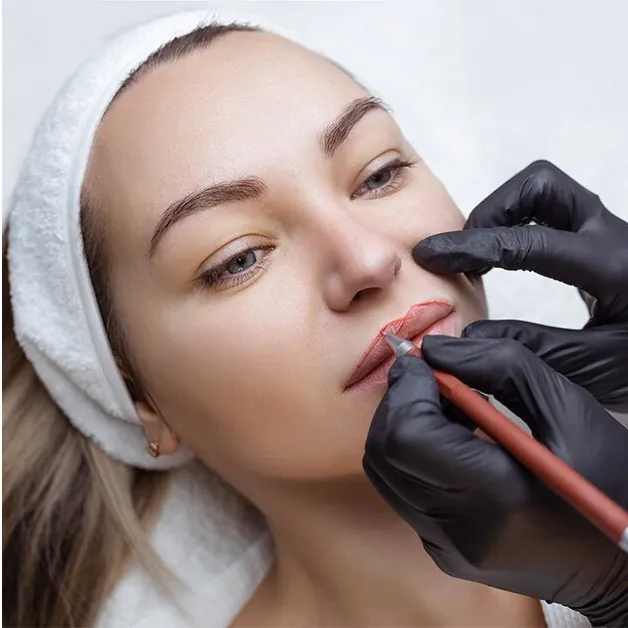
Getting a lip blush tattoo is meant to give you soft, naturally flushed lips that enhance your beauty. But what happens when the results of a previous treatment are not what you expected? Whether your lip blush turned out too dark, too warm, too uneven, or simply not the shape you envisioned, lip blush correction is a specialised service designed to address these issues. However, understanding what can realistically be achieved is the first and most important step.
At Brows and Lips Dubai, we believe in honesty, transparency, and managing expectations from the very beginning. In this guide, we walk you through everything you need to know about correcting lip blush — what is fixable, what takes time, and when you need to accept the limitations of correction work.
WHY LIP BLUSH CORRECTION IS DIFFERENT FROM A FIRST TREATMENT
A correction is not the same as a fresh lip blush application. When correcting existing work, your artist is working with previous pigment that is already embedded in your skin. This changes how new pigment reacts, how the colour heals, and what can be achieved in one session. Old pigment can mix with new pigment, creating unexpected colour shifts. The skin itself may have scar tissue or uneven texture from the previous procedure, which affects pigment retention. For these reasons, correction treatments often require more sessions and more patience than a first-time lip blush.
COMMON ISSUES THAT CAN BE CORRECTED
Many lip blush concerns can be improved with the right approach. Here are the most common issues we address:
Colour Too Dark or Too Intense
If your lip blush healed darker than expected, a correction can help. This may involve using a lighter pigment blend to soften the overall tone, or in some cases, a colour correction technique that neutralises the excess darkness. Multiple sessions may be needed, and the lightening happens gradually.
Colour Too Warm (Orange or Yellow Undertones)
A warm-toned result that looks orange or yellow is one of the most common complaints. This is often caused by the underlying natural lip colour mixing with the pigment. Correcting warm tones requires a colour theory approach — adding cooler or neutral tones to balance the warmth. This is highly effective but requires professional expertise.
Uneven or Patchy Colour
Patchiness can occur when pigment does not take evenly across the lips. This is often due to scar tissue, dry patches, or improper application technique. A skilled artist can identify the thin areas and deposit additional pigment where needed. However, complete uniformity may not always be possible depending on the condition of the lip tissue.
Blurred or Feathered Lip Line
If the lip border has blurred, spread, or lost its definition over time, a correction can redefine the lip line. This involves carefully depositing pigment along the border to create a clean, crisp edge. Results depend heavily on how much the original pigment has migrated.
Asymmetrical Shape
Lip blush that healed unevenly on each side can often be improved. An experienced artist can balance the shape by adding pigment to the thinner side or subtly adjusting the lip line. Perfect symmetry is difficult to achieve, but significant improvement is realistic.
Faded or Discoloured Pigment (Grey, Blue, or Green Tones)
Over time, some pigments shift to undesirable colours — especially if low-quality pigments were used or if the pigment was implanted too deeply. This is one of the most challenging corrections. Neutralising these tones requires advanced colour theory knowledge, and removal may be recommended before a fresh application.
WHAT CANNOT BE FIXED WITH CORRECTION ALONE
It is just as important to understand the limitations. Some issues cannot be fully resolved with a correction session and may require alternative approaches such as laser removal or saline removal before starting over.
- Scar tissue and textural changes: If scar tissue formed from a deep or aggressive previous procedure, pigment may not hold well in those areas. Correction can help, but cannot erase scar tissue.
- Very old, stubborn pigment: Pigment that has been in the skin for many years and has settled deep may not respond well to correction. Removal is often the better first step.
- Significant colour contamination: When multiple layers of different pigments have been applied over time, the colour may be too complex to correct with new pigment alone.
- Allergic reactions or granulomas: If your lips have developed an allergic reaction or granulomas (small bumps) from previous pigment, correction should not be performed until the reaction is fully resolved.
- Expecting a complete colour change in one session: Realistic correction is a gradual process. Dramatic colour changes usually require multiple sessions spaced weeks apart.
THE CORRECTION PROCESS: WHAT TO EXPECT
Your correction journey typically follows these steps:
Step 1 — Consultation: A thorough assessment of your existing lip blush. Your artist will evaluate the colour, shape, symmetry, and skin condition. They will take photos and discuss what is achievable in your specific case.
Step 2 — Colour analysis and planning: Using colour theory, your artist determines which pigment shades will neutralise or enhance your current colour. A custom blend is created for your correction.
Step 3 — The correction session: The procedure itself is similar to a regular lip blush appointment. Numbing cream is applied, and pigment is deposited using precise techniques. The session may be shorter or longer depending on the complexity of the correction.
Step 4 — Healing and assessment: Healing takes 4 to 6 weeks. Once healed, your artist will assess the results. A second session is often recommended to perfect the colour and address any remaining unevenness.
HOW MANY SESSIONS ARE NEEDED?
Most lip blush corrections require 2 to 3 sessions to achieve optimal results. The first session addresses the major concerns. The second session refines and perfects. A third session may be needed for complex cases, especially when colour neutralisation is required. Patience is essential — rushing the process can lead to disappointment.
COLOUR THEORY IN LIP BLUSH CORRECTION
Professional lip blush correction relies on colour theory — the science of how colours interact. Your artist may use:
- Cool-toned pigments to neutralise overly warm (orange/yellow) results.
- Warm-toned pigments to correct greyish or ashy tones.
- Peach or salmon tones to counteract blue or purple discolouration.
- Lighter pigment blends to soften an overly dark result.
This is not guesswork — it is a precise, science-based approach that requires significant training and experience.
HEALING AFTER A CORRECTION
Healing after a correction is similar to healing after an initial lip blush, but there are some differences. The skin may be more sensitive, especially if it has been treated before. Swelling and tenderness may be slightly more pronounced. Peeling will occur as the new pigment settles. The final colour may take longer to reveal itself because of the interaction between old and new pigment. Follow all aftercare instructions carefully. Do not pick or peel the skin. Avoid spicy foods, direct sunlight, and strenuous activity during the healing phase.
WHEN TO CONSIDER REMOVAL INSTEAD
In some cases, correction is not the best option. If your lip blush is severely discoloured, if the shape is completely wrong, or if you simply want to start fresh, lip blush removal may be the better path. Laser removal and saline removal are both effective methods. Once the old pigment is significantly faded or removed, a fresh lip blush can be applied. This approach takes more time but often delivers better results than attempting to correct deeply problematic pigment.
THE ROLE OF A TOUCH-UP AFTER CORRECTION
Even after successful correction, a touch-up session 4 to 8 weeks later is recommended. This allows your artist to assess the healed result and make any final adjustments. The touch-up is what transforms a good correction into a great one. Do not skip this step.
REALISTIC EXPECTATIONS: THE KEY TO SATISFACTION
The most important factor in a successful lip blush correction is managing expectations. A correction can dramatically improve the appearance of your lips, but it cannot make them perfect. Scars, texture, and previous pigment depth all impose limits. Trust your artist's professional assessment. If they advise that removal followed by a fresh application is the better route, listen. If they recommend multiple sessions, be patient. The goal is always to give you lips you feel confident and beautiful in — not to chase an unrealistic ideal.
FINAL THOUGHTS
Lip blush correction is a highly skilled service that requires experience, artistry, and an honest understanding of what is possible. At Brows and Lips Dubai, our artists are trained in advanced correction techniques and will always give you a realistic assessment before any work begins. Whether you need a subtle adjustment or a more significant transformation, we are here to help you love your lips again.
Ready to discuss your lip blush correction? Book a consultation with us today and let us create a plan tailored to your unique needs.
Remember: Patience, realistic expectations, and a skilled artist are the three pillars of successful lip blush correction. Trust the process.