Chemical peels are one of the most effective and time-tested treatments for achieving smoother, brighter, and more evenly toned skin. At Brows and Lips Dubai, we offer medical-grade chemical peels tailored to your skin type and concerns — from gentle superficial peels that deliver a fresh glow to deeper peels that address stubborn pigmentation and fine lines. If you have been searching for a skin treatment that delivers visible results without the downtime of laser or surgery, this guide is for you.
What Is a Chemical Peel?
A chemical peel is a professional skin-resurfacing treatment that applies a controlled-strength acid solution to the face (or body) to remove the outermost layers of dead, damaged skin. Depending on the peel depth — superficial, medium, or deep — the solution penetrates to different levels of the skin to stimulate collagen production, accelerate cell turnover, and reveal fresher, healthier skin underneath.
Chemical peels have been a cornerstone of aesthetic dermatology for decades. They are safe when performed by trained professionals, and the results are cumulative: each session builds on the previous one to create a lasting improvement in skin texture, tone, and clarity.
Types of Chemical Peels
Superficial Peels (Light)
Superficial peels use mild acids like glycolic acid (10–30%), lactic acid, or salicylic acid to gently exfoliate the top layer of the epidermis. These peels require no downtime, cause minimal redness, and are ideal for maintaining skin radiance or treating mild dullness. You can return to your daily routine immediately after treatment. A series of 4–6 sessions spaced 2–4 weeks apart produces the best results for ongoing skin health.
Medium Peels
Medium peels reach the papillary dermis using higher concentrations of glycolic acid (50–70%) or trichloroacetic acid (TCA) in the 15–35% range. They effectively treat sun damage, moderate hyperpigmentation, fine lines, and uneven texture. The skin will peel visibly over 3–7 days, after which you will notice a dramatic improvement in skin smoothness and clarity. Medium peels are typically spaced 6–8 weeks apart.
Deep Peels
Deep peels using high-concentration TCA (35%+) or phenol are reserved for more advanced skin concerns: deep wrinkles, precancerous growths, and significant photodamage. These require medical supervision and a recovery period of 7–14 days. Deep peels produce the most dramatic results but are performed less frequently — and only after a thorough consultation to ensure they are appropriate for your skin type and goals.
Key Benefits of Chemical Peels
- Brighter complexion — By removing the layer of dead, dull skin cells, a chemical peel reveals the fresh, radiant skin underneath. Even a single session produces a noticeable glow
- Reduced hyperpigmentation — Chemical peels are highly effective for treating melasma, post-inflammatory hyperpigmentation (PIH), sunspots, and uneven pigmentation. Medium peels targeted at melanin clusters help fade dark patches over 2–4 sessions
- Smoothened texture — Rough patches, enlarged pores, and fine lines are visibly softened. The exfoliation and collagen stimulation work together to refine skin texture
- Acne control — Salicylic acid peels penetrate deep into pores to clear congestion, reduce blackheads, and calm active breakouts. A regular peel schedule helps keep acne-prone skin under control
- Collagen boost — Deeper peels stimulate fibroblast activity, increasing collagen and elastin production. This creates a plumping effect that reduces fine lines over time
- Improved product absorption — After a peel, your skincare products penetrate more effectively, so your serums and moisturisers work harder and deliver better results
What to Expect During a Chemical Peel Treatment
Consultation and Skin Prep
Every peel begins with a skin consultation. Your practitioner assesses your Fitzpatrick skin type, current concerns, and any history of pigmentation issues or sensitivities. They will advise on pre-treatment skincare — typically avoiding retinoids, exfoliants, and direct sun exposure for 3–7 days before the peel.
The Procedure
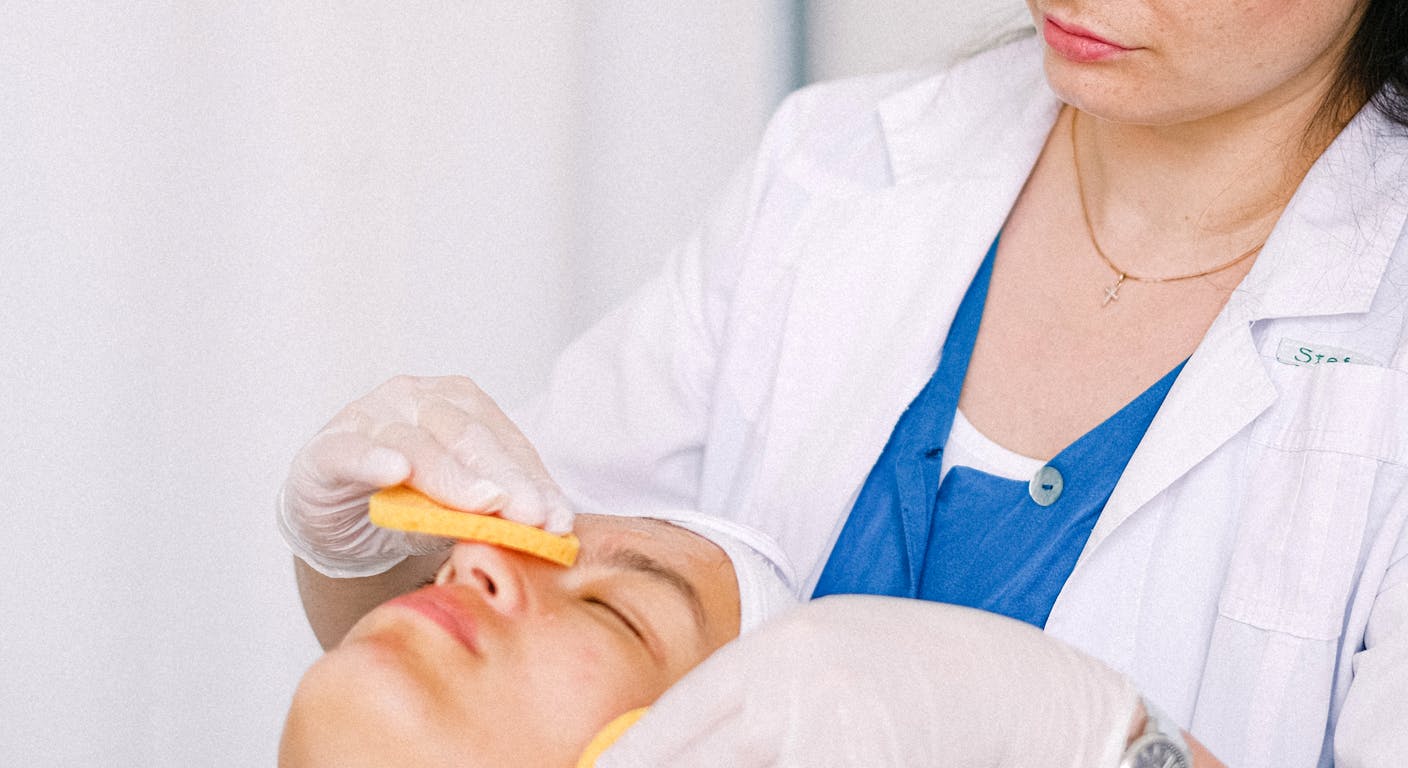
The treatment itself is quick. After thoroughly cleansing the skin, the peel solution is applied evenly with a brush or cotton pad. You may feel a mild tingling or warm sensation that lasts 2–5 minutes, depending on the peel strength. A fan or cool air can be used to keep you comfortable. The solution is then neutralised and removed. The entire appointment takes 20–30 minutes.
Post-Peel Sensation
Immediately after the peel, your skin will feel tight and look slightly pink or flushed — similar to a mild sunburn. Superficial peels usually settle within an hour, while medium peels may cause more noticeable redness and subsequent peeling that begins 48–72 hours later.
Chemical Peel Aftercare — What You Need to Know
- No picking or peeling — Let the skin shed naturally. Picking at peeling skin can cause scarring and leave uneven patches of pigmentation
- Gentle cleansing only — Use a mild, non-foaming cleanser for the first 3–5 days. Avoid scrubs, exfoliants, and active ingredients like retinol, glycolic acid, or vitamin C during recovery
- SPF is non-negotiable — Your fresh skin is highly vulnerable to UV damage after a peel. Apply a broad-spectrum SPF 50+ every single day, even indoors, for at least 2 weeks post-treatment
- Keep skin hydrated — Use a fragrance-free moisturiser with ceramides or hyaluronic acid to support the skin barrier during recovery
- Avoid heat and sweat — Skip saunas, steam rooms, hot yoga, and intense workouts for 48–72 hours after a superficial peel and up to a week after a medium peel
- No makeup for 24 hours — Let the skin breathe immediately after treatment. Mineral makeup is acceptable after 24 hours for superficial peels
Chemical Peel Results Timeline
- Immediately after — Skin appears brighter and tighter. A mild pink or flushed look is normal
- Days 2–5 — For medium peels, peeling begins. The skin flakes or sheds in thin sheets. This is a normal part of the regeneration process
- Day 7 — The new skin is visible: smoother, more even-toned, and radiant
- 2–4 weeks after — Collagen production ramps up. Fine lines soften, and pigmentation continues to fade
- With a series (4–6 sessions) — Long-lasting improvement in skin texture, pore size, and overall luminosity
Chemical Peel vs Other Facial Treatments
- Chemical Peel vs HydraFacial — HydraFacial delivers hydration and gentle exfoliation with zero downtime, ideal for maintenance. Chemical peels offer deeper penetration for treating pigmentation and texture concerns but require 1–7 days of downtime depending on depth
- Chemical Peel vs Microneedling — Microneedling creates micro-injuries to trigger collagen production, best for scarring and deep wrinkles. Chemical peels focus on surface-level resurfacing, pigmentation, and overall skin brightness. They are sometimes combined for comprehensive results
- Chemical Peel vs Laser Resurfacing — Laser treatments use heat to resurface the skin and require more significant downtime. Chemical peels are cost-effective, require less advanced equipment, and are suitable for a wider range of skin types when performed by a skilled practitioner
Your skin's best version is just a peel away. Chemical peels offer proven, predictable results for brighter, smoother, and more youthful-looking skin. Book a consultation at Brows and Lips Dubai to find the right peel depth for your skin concerns.