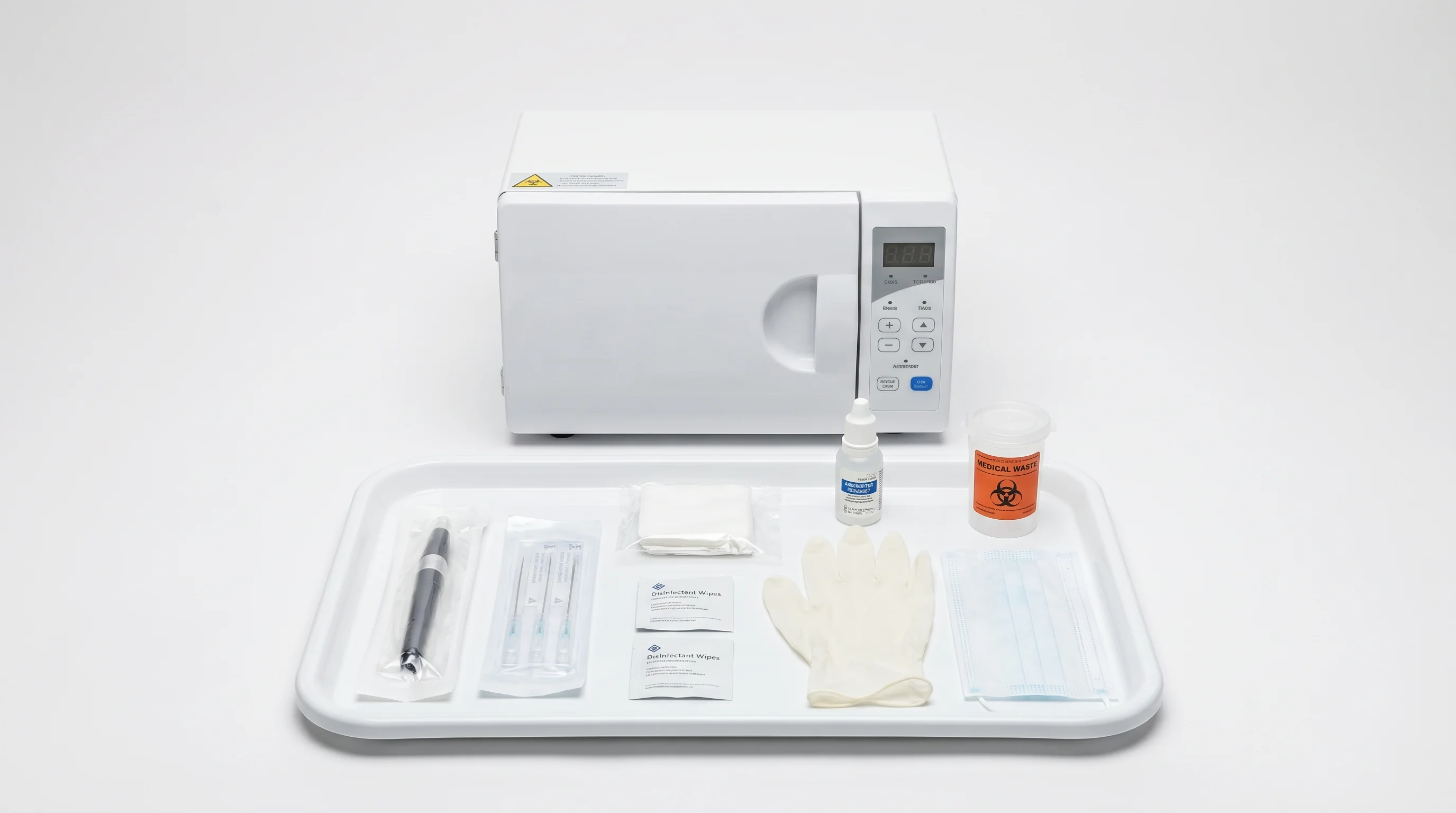
As a permanent makeup studio owner and artist in Dubai for nearly a decade, I can tell you exactly what happens when the Dubai Health Authority (DHA) walks through your door for an inspection. Your heart races. You hope every autoclave cycle was logged. You pray the sharps disposal is labeled correctly. And if you’ve been cutting corners? You’re about to learn a very expensive lesson.
The truth is, PMU studio hygiene isn’t just about passing inspections—it’s about protecting the trust your clients place in you when they sit in your chair. In Dubai, where DHA standards are among the strictest in the region, getting it wrong can mean fines, suspension, or worse. But getting it right? That’s how you build a reputation that lasts.
What the Dubai Health Authority Actually Requires
Let me break down what DHA inspectors are looking for when they visit your PMU studio. Because I’ve been through it, and I’ve seen what separates the studios that breeze through inspections from the ones that get shut down.
Sterilization: The Non-Negotiable Standard
The DHA requires that all reusable instruments used in permanent makeup procedures be sterilized using a class B autoclave with printed cycle verification. I learned this the hard way when a friend’s studio in JLT was fined AED 15,000 for using a cheap UV sterilizer instead of a proper autoclave. The inspector didn’t just fine them—he documented it, and that mark stayed on their DHA record for two years.
Our studio in Dubai Healthcare City runs daily spore tests (yes, every single day) and logs each autoclave cycle by hand. It’s tedious. It’s time-consuming. But when Fatima, an Emirati client I’ve been treating for three years, asked me about our sterilization protocols before her lip blush session, I could open the logbook and show her every cycle from the past six months. She booked three more sessions that day.
Single-Use Items: Use Once, Dispose Properly
Everything that can be single-use must be single-use. Needles, pigment cups, gloves, cotton swabs, barrier films—all of it goes in the biohazard bin after one use. I remember training a new artist who thought she could save money by reusing pigment cups. “They’re plastic, they can be cleaned,” she said. I showed her the DHA regulation that explicitly prohibits this. She didn’t last long in this industry.
Layla, a Lebanese client who works in hospitality, told me she once walked out of a Dubai salon mid-consultation because she saw the artist reaching for a pigment cup that had been sitting out uncovered. “If they’re cutting corners on something I can see,” she said, “what are they doing with things I can’t see?” She’s now a loyal client at our studio because she watched me open a fresh sealed cartridge for her brows.
The Physical Space: What DHA Inspectors Check
Dubai’s health regulations don’t just cover how you work—they cover where you work. The treatment room must have washable surfaces (no porous materials), proper ventilation, and a separate handwashing sink that isn’t used for anything else. We learned to seal our grout lines with epoxy after an inspector pointed out that regular grout can harbor bacteria.
- Flooring: Smooth, non-porous, easy to sanitize. No carpet in treatment areas.
- Work Surfaces: Stainless steel or sealed laminate. Wiped with hospital-grade disinfectant between clients.
- Lighting: Must be adequate for the procedure. Natural light preferred, LED or surgical lighting acceptable.
- Waste Management: Color-coded bins—yellow for biohazard, black for general waste. Sharps container mounted on the wall.
- Air Quality: The room must have ventilation that exchanges air at least 6 times per hour.
When we renovated our studio in 2024, we spent an extra AED 8,000 on medical-grade flooring and seamless countertops. Was it expensive? Yes. But when DHA inspectors came for our annual audit, they spent less than 20 minutes in our treatment rooms. “Everything’s where it should be,” the inspector said. That ten-minute inspection was worth every dirham of that renovation.
Pigment and Product Safety: What DHA Doesn’t Tell You
Here’s something many Dubai PMU artists don’t realize: the DHA doesn’t just care about how pigments are applied—they care about what’s in them. All pigments used in Dubai must be CE-marked and approved for intradermal use. We switched to a Swiss pigment brand in 2023 specifically because they provided full ingredient disclosure and batch testing certificates for every single bottle.
Noor, a client from Abu Dhabi who drives to our Dubai studio specifically, told me she chose us because we were the only studio that emailed her the safety data sheets for the pigments before her appointment. “I have sensitive skin and allergies,” she said. “Knowing exactly what you’re putting into my skin means everything.” That level of transparency isn’t just good hygiene—it’s good business.
Client Screening: The First Line of Defense
Hygiene doesn’t start in the treatment room—it starts at the consultation. Every client who walks into our studio completes a medical history questionnaire that covers autoimmune conditions, allergies, medications (especially blood thinners and acne treatments like Accutane), pregnancy status, and previous PMU work.
I once had a client named Sarah—a British expat working in Media City—who forgot to mention she was on a blood-thinning medication. Two days before her session, I called to confirm and she casually mentioned her prescription. I postponed her appointment until she got clearance from her doctor. She was frustrated at first, but when she came back six weeks later and saw how clean and safe our process was, she brought three friends with her.
We also photograph the client’s skin before every procedure. This isn’t just for record-keeping—it’s a hygiene and safety measure. If we see any skin conditions (active acne, eczema, rashes, cuts, sunburn), we postpone the procedure. No exceptions. The DHA supports this protocol, and it’s saved us from performing procedures on skin that wasn’t ready.
Documentation: The Paper Trail That Protects You
I cannot emphasize this enough: document everything. The DHA expects studios to maintain records for a minimum of five years. Our system includes:
- Client consent forms signed and dated
- Procedure logs with pigment batch numbers and needle lot numbers
- Sterilization logs with time, date, and cycle results
- Aftercare instructions signed by the client
- Complication reports (thankfully rare, but documented when they occur)
When a client from The Palm had an unexpected reaction three weeks after her brow session (it turned out to be a pre-existing autoimmune condition she hadn’t disclosed), our documentation was complete. We had the pigment batch number, the needle lot number, and her signed consent form with all the pre-procedure questions answered. The DHA investigator reviewed our records and cleared us within 24 hours. Without that paper trail, we could have faced a lengthy investigation.. Learn more about PMU for Men: Eyebrows, Beard Enhancement & More in our detailed guide
Common Hygiene Violations Dubai PMU Artists Make
After years in this industry, here are the mistakes I see most often in Dubai studios:
- Using tap water in pigment: Dubai’s tap water isn’t sterile. Use distilled or sterile water only.
- Dipping needles multiple times: Each dip is a contamination risk. Use individual needle cartridges.
- Wearing jewelry: Rings and bracelets trap bacteria, even under gloves.
- Skipping handwashing between glove changes: Gloves aren’t a substitute for hand hygiene.
- Reusing barrier film: That plastic wrap on your machine should be fresh for every client.
- Eating or drinking in treatment areas: You’d be surprised how common this is.
- Storing clean and dirty instruments together: They need physically separate areas.
Aisha, a PMU artist who rents a chair in a JBR salon, told me she was shocked when her first DHA inspection resulted in three violations. “I thought I was being clean,” she said. “I just didn’t know the specifics.” She spent AED 20,000 retrofitting her workspace to meet DHA standards. She now trains other artists on compliance—and her booking calendar is full six months out.. Learn more about Lip Blush Healing Timeline: What to Expect Day… in our detailed guide
The Real Cost of Poor Hygiene
Let me be direct about this. A DHA fine for a hygiene violation starts at AED 5,000 and can go up to AED 100,000 for repeat offenses. But the real cost isn’t the fine—it’s the reputation damage. In Dubai’s tight-knit beauty community, news of a hygiene violation spreads fast. I’ve seen studios lose 60% of their client base within a month of a publicized violation.
Compare that to the investment in proper hygiene: a class B autoclave costs AED 3,000-8,000, hospital-grade disinfectant runs about AED 200 per month, and sterilization indicators and spore tests add maybe AED 500 monthly. For less than AED 1,500 per month, you can run a fully compliant studio that your clients trust implicitly.
When clients ask me why our prices are higher than some other Dubai studios, I show them our sterilization log, our DHA license, our pigment safety data sheets, and our autoclave. “This is what you’re paying for,” I tell them. “Peace of mind.” Not a single client has ever argued after seeing that.
Dubai-Specific Considerations for PMU Hygiene
Dubai’s climate presents unique hygiene challenges. The heat and humidity can accelerate bacterial growth in improperly stored supplies. We keep our pigment supplies in a temperature-controlled cabinet—never above 25°C. Our sterile supplies are sealed and stored away from sunlight and moisture.
The high client turnover in Dubai also means more potential for cross-contamination if your booking schedule doesn’t allow proper cleaning between sessions. We schedule 30 minutes between clients specifically for cleaning and resetting the treatment room. That’s 30 minutes we could be earning money—but it’s 30 minutes that keeps our clients safe.
Final Thoughts: Hygiene Is Non-Negotiable
After nearly ten years in this industry, I can tell you that the studios that treat hygiene as a marketing checkbox are the ones that don’t survive. The studios that treat it as a fundamental part of their service—those are the ones that build real, lasting client relationships.
When a client sits in my chair, they’re not just trusting my artistic ability. They’re trusting me with their health. That’s a responsibility I take seriously, and it’s why I’ll never cut corners on hygiene—no matter how much pressure there is to fit in one more client or save a few dirhams on supplies.
If you’re a PMU artist in Dubai and you’re unsure about your DHA compliance, get an audit. Hire a consultant. Talk to a DHA-approved training center. The cost of getting compliant is nothing compared to the cost of getting caught non-compliant.
Your clients deserve a clean, safe environment. And in Dubai, the DHA will make sure they get one—whether you’re ready or not.
Our studio at Brows & Lips follows all DHA regulations for permanent makeup hygiene and sterilization. We welcome client questions about our protocols and provide full transparency about our processes.
Explore our our studio standards and hygiene practices FAQ at Brows and Lips Studio Dubai.
Remember: Medical PMU changes lives. From scar camouflage to restoration — discover the healing power of expert pigment work.