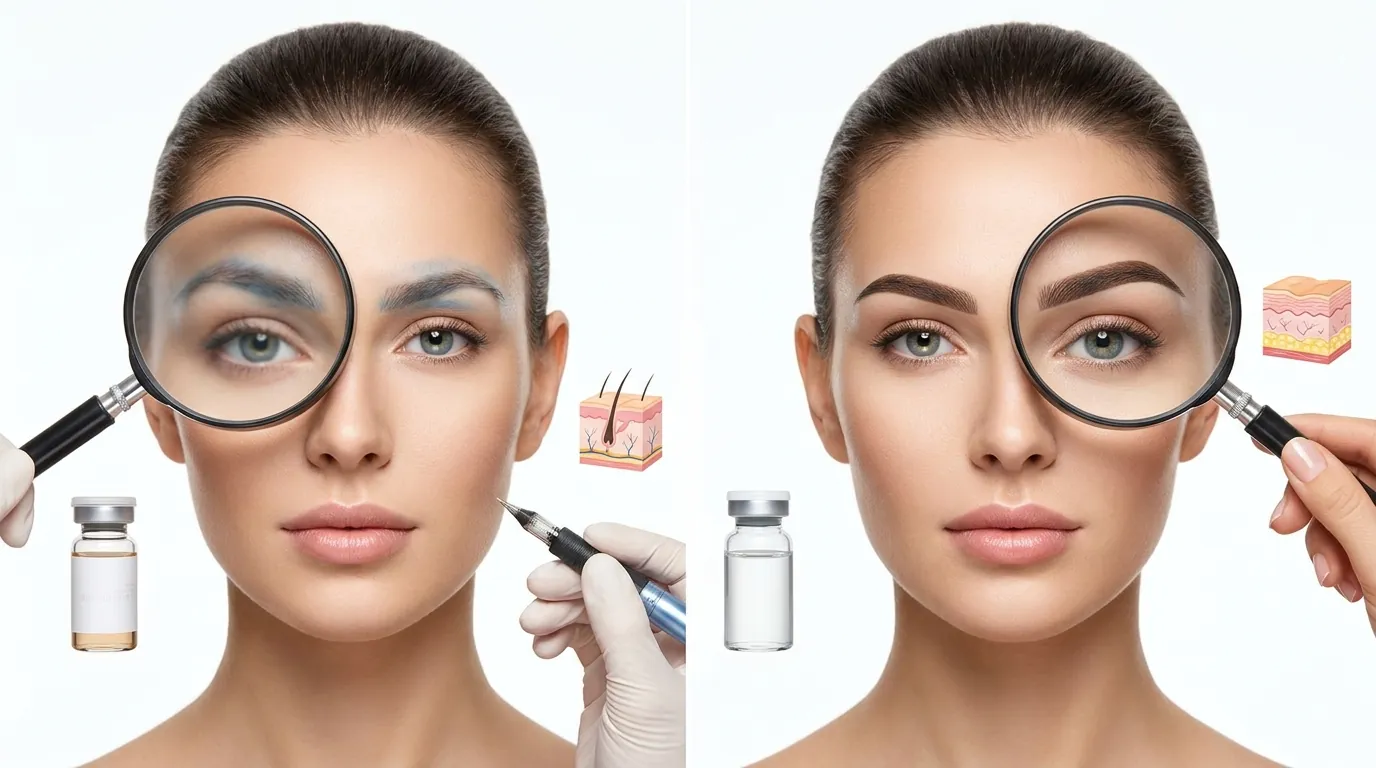
What Is PMU Pigment Migration?
PMU pigment migration is one of the most concerning complications in the permanent makeup industry. It occurs when pigment particles drift beyond their intended placement, spreading into surrounding skin tissue and creating blurred, uneven, or discoloured results. For clients in Dubai who invest in high-quality PMU procedures, pigment migration can be distressing—transforming what should be a beautiful enhancement into something that requires correction.
Understanding what causes pigment migration and how to prevent it is essential for both PMU artists and clients. In this guide, we’ll dive deep into the science behind pigment migration, the common causes, and the prevention strategies that Brows & Lips UAE uses to ensure flawless, long-lasting results.
How Does Pigment Migration Happen?
Pigment migration happens when the pigment particles deposited in the dermal layer of the skin are transported away from their original location. This can happen through several mechanisms:
- Lymphatic System Absorption: The body’s lymphatic system is designed to remove foreign particles. If pigment particles are too small or the immune response is too aggressive, they can be carried away via lymph channels.
- Capillary Action: In highly vascularised areas, pigment can be drawn into blood capillaries and spread to adjacent tissue.
- Mechanical Displacement: Poor technique, such as implanting pigment too deeply or at the wrong angle, can physically push pigment beyond the desired area.
- Inflammatory Response: Excessive trauma to the skin during the procedure can trigger an inflammatory reaction that causes pigment to spread.
Common Causes of Pigment Migration
1. Needle Depth and Technique
The number one cause of pigment migration is improper needle depth. If the needle penetrates too deeply—past the papillary dermis into the reticular dermis—pigment particles can enter blood vessels and lymph channels. This is especially common in areas with thin skin, such as the eyelids and under-eye area. A skilled PMU artist knows exactly how deep to implant pigment: typically 1–2 mm into the skin, staying within the upper dermis.
2. Pigment Particle Size
The size of pigment particles plays a significant role in migration risk. Larger particles (above 1 micron) tend to stay in place because they’re too big for the lymphatic system to transport. However, they can look less natural. Smaller particles create a more natural appearance but are more susceptible to migration. Premium PMU pigments use a balanced particle size distribution to optimise both appearance and retention.
3. Skin Type and Condition
Not all skin is the same, and certain skin types are more prone to pigment migration. Oily skin has larger pores and more active sebaceous glands, which can cause pigment to spread over time. Mature skin has reduced elasticity and a thinner dermis, making it easier for pigment to migrate. Clients with rosacea, eczema, or damaged skin barriers are also at higher risk.
4. Eyeliner and Mucous Membrane PMU
Eyeliner PMU is one of the highest-risk procedures for pigment migration. The eyelid skin is the thinnest on the body (less than 1 mm thick), with an extremely rich blood supply. If the needle goes even slightly too deep, pigment can migrate downward into the under-eye area or outward along the lymph channels, creating a smudged, bruised appearance that’s very difficult to correct.
5. Over-Saturation and Packing
When an artist tries to achieve deep, intense colour in a single session by over-packing pigment into the skin, they increase the risk of migration significantly. The skin has a limited capacity to hold pigment. Going beyond this capacity means the excess pigment has nowhere to go but outward. This is why experienced artists prefer multiple sessions with lighter saturation rather than one heavy session.
6. Aftercare Negligence
Post-procedure aftercare is just as important as the procedure itself. Rubbing, scratching, or picking at the treated area during the healing phase can physically displace pigment. Excessive sweating, steam exposure (saunas, steam rooms), and direct water pressure can also contribute to migration during the first week of healing.
Prevention Strategies: How Top PMU Artists Avoid Migration
Proper Training and Certification
Prevention starts with the artist. At Brows & Lips UAE, our PMU artists undergo rigorous training that includes extensive practice on skin models before working with real clients. We study skin anatomy, pigment science, and needle dynamics to understand exactly how and where pigment should be placed.
High-Quality Pigments
We use only premium, medical-grade pigments with controlled particle size distribution. These pigments are formulated to stay where they’re placed, with minimal migration risk. We avoid cheap pigments that may contain fillers, heavy metals, or inconsistent particle sizes.
Stretch Technique and Needle Selection
Proper skin stretching during the procedure is critical. Good stretching stabilises the skin and ensures consistent needle penetration depth. We also match our needle configuration to the specific procedure and skin type. For example, we use finer needles for eyeliner work on thin, delicate eyelid skin.
Conservative Approach
Our philosophy is simple: less is more. We start with lighter pigment saturation and build up colour over multiple sessions. This gradual approach not only reduces migration risk but also produces more natural-looking results. Clients appreciate that we prioritise safety over speed.. Learn more about Fixing Old PMU: Correction Success Stories in our detailed guide
Skin Assessment
Every client receives a thorough skin assessment before treatment. We check for skin type, existing conditions, medication use, and any factors that might increase migration risk. If we identify a high-risk factor, we adjust our technique accordingly or recommend alternative approaches.. Learn more about Correcting Bad PMU from Other Studios: Complete… in our detailed guide
What to Do If Pigment Migration Has Already Happened
If you’re reading this because you’re already dealing with pigment migration, don’t panic. There are solutions, though they require patience and expertise.
Laser Removal
Q-switched or picosecond lasers are the most effective method for removing migrated pigment. These lasers break down pigment particles into tiny fragments that the body can naturally eliminate. However, laser removal requires multiple sessions and carries its own risks, including skin lightening or darkening.
Saline Removal
Saline removal involves introducing a saline solution into the pigmented area, which draws the pigment to the surface as the skin heals. It’s gentler than laser and suitable for smaller areas, but it also requires multiple sessions and can be more painful than the original PMU procedure.
Color Correction
In some cases, especially where migration has caused a colour shift (for example, black eyeliner migrating and turning blue-grey), colour correction can neutralise the unwanted tone. This is a temporary solution that works best when migration is mild.
Why Dubai Clients Should Care About Pigment Migration
Dubai’s climate and lifestyle add some unique considerations when it comes to pigment migration. The intense UV exposure can accelerate pigment breakdown and, in some cases, contribute to migration. Dubai’s humidity can affect healing, and many residents enjoy activities like swimming, saunas, and intense gym workouts that can impact pigment retention.
This is why choosing a PMU studio that understands the local context is so important. At Brows & Lips UAE, we’ve developed aftercare protocols specifically tailored to Dubai’s climate. We advise clients on sun protection, activity restrictions, and skincare routines that protect their PMU investment.
Frequently Asked Questions About Pigment Migration
Q: How common is PMU pigment migration?A: With a skilled, experienced artist, migration is rare—affecting less than 1% of procedures. However, rates are significantly higher with inexperienced artists or low-quality pigments.
Q: Can pigment migration happen months after the procedure?A: It’s uncommon but possible. Most migration occurs within the first few weeks of healing. Late-onset migration is usually linked to inflammation, trauma, or an immune reaction.
Q: Are certain PMU procedures more prone to migration?A: Yes. Eyeliner and lip blush have higher migration rates due to the thin skin and rich blood supply in these areas. Brows are generally lower risk.
Q: Can I fix pigment migration myself?A: Absolutely not. Attempting to remove or correct migrated pigment at home can cause scarring, infection, and permanent skin damage. Always consult a professional.
Conclusion: Prevention Is Always Better Than Cure
PMU pigment migration is a preventable complication when the right techniques, products, and expertise are applied. At Brows & Lips UAE, we’ve made it our mission to deliver PMU results that are not only beautiful but safe and long-lasting. Our commitment to ongoing education, premium products, and personalised client care means migration is something our clients rarely have to worry about.
Whether you’re considering your first PMU procedure or looking to correct a migration issue from a previous artist, our team in Dubai is here to help. Book a consultation today and experience the difference that true expertise makes.
Explore our PMU FAQ and consult an expert at Brows and Lips Studio Dubai.
Remember: Pigment migration is rare but fixable. Understanding the causes helps you choose a skilled, experienced artist.