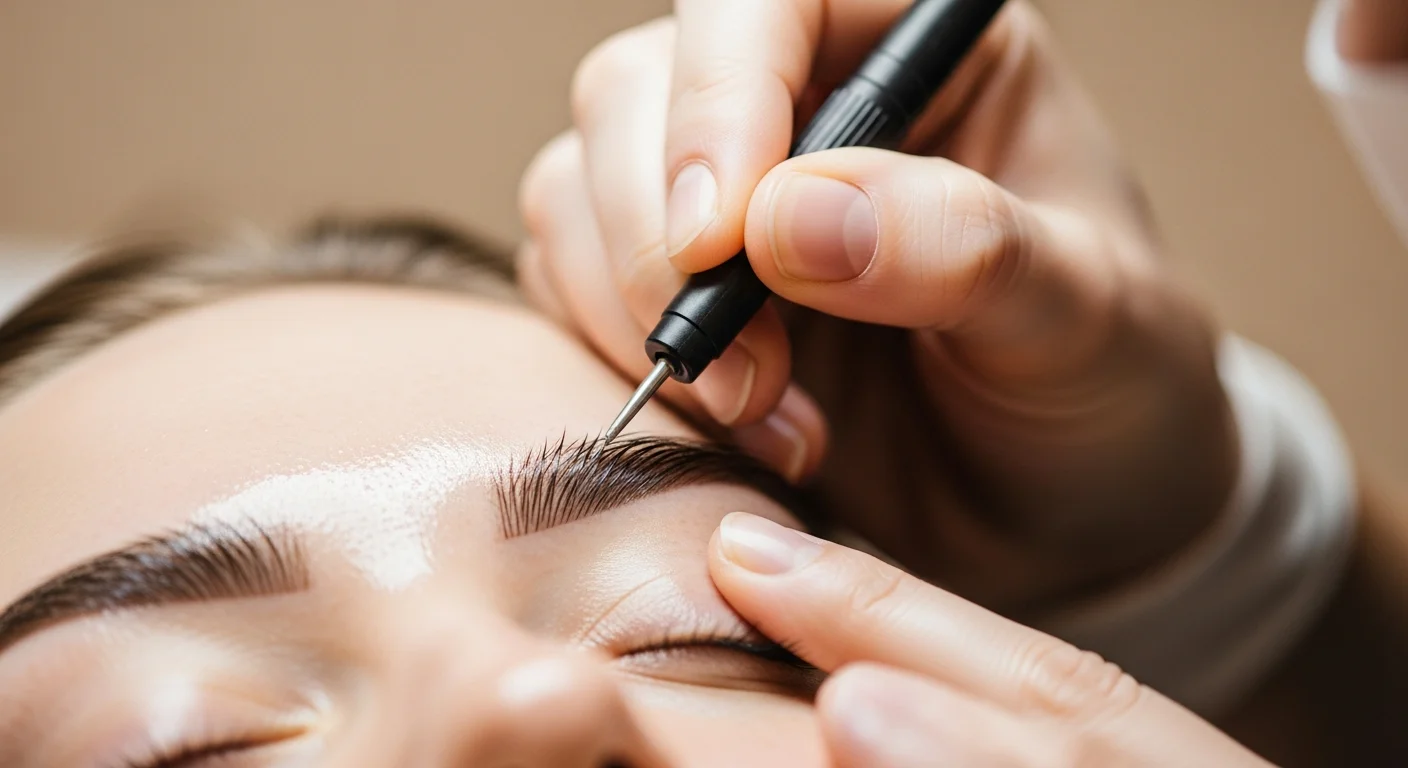
Understanding Oily Skin and Its Effect on Microblading
Before we dive into longevity, it's important to understand why oily skin behaves differently with microblading compared to normal or dry skin.
Sebum — the natural oil produced by your sebaceous glands — is your skin’s way of keeping itself moisturised and protected. However, when your skin produces excess sebum, it can interfere with the microblading process in several ways:
- Pigment migration: Excess oil can cause the pigment to spread or blur outside the intended hair strokes
- Faster fading: Your body’s natural oil production accelerates the breakdown and removal of pigment particles
- Poorer stroke retention: The tiny incisions made during microblading may heal with less crisp definition
- Increased healing fluid: Oily skin tends to produce more lymphatic fluid during healing, which can push pigment out
The result? While someone with normal to dry skin might enjoy crisp microblading results for 12 to 18 months, someone with oily skin may see significant fading in as little as 6 to 12 months.
So, How Long Does Microblading Last on Oily Skin?
This is the million-dollar question, and here’s the honest answer:
On oily skin, microblading typically lasts between 6 and 12 months before a touch-up is needed.
This is roughly half the lifespan that someone with dry or normal skin can expect. However, the exact duration depends on several factors including the severity of your oiliness, pigment colour used, artist technique, aftercare compliance, sun exposure, skincare routine, and touch-up schedule.
Most clients with oily skin will need an initial touch-up at 4 to 6 weeks (standard for everyone), followed by a colour boost every 6 to 12 months to keep their brows looking fresh.
Why Does Oily Skin Cause Faster Fading?
The Science of Sebum and Pigment Retention
Your skin’s natural cell turnover cycle typically takes about 28 days. Oily skin often has a faster turnover rate, meaning your skin sheds pigmented cells more quickly. Additionally, sebum creates a barrier that sits between the pigment and your skin’s deeper layers. Over time, this oil-rich environment pushes pigment particles outward, where they are naturally exfoliated away.
The Dubai Factor
Living in Dubai adds another layer to this equation. Dubai’s hot and humid climate stimulates additional oil production. Even clients with combination skin often find themselves producing more sebum during the summer months than they would in cooler climates. This year-round heat means your body is almost constantly in oil-production mode, which can accelerate pigment fading.
Can You Still Get Microblading with Oily Skin?
Absolutely. Oily skin is not a disqualifier for microblading, but it does require realistic expectations and a tailored approach. Many clients with oily skin achieve beautiful results with microblading when the right techniques and aftercare are followed.
Here at Brows & Lips, our artists assess your skin type during your initial consultation and adjust their technique accordingly. This might include using a slightly deeper needle depth, selecting pigments with warmer undertones that hold better in oily skin, adjusting the pigment density, and recommending a more frequent touch-up schedule.
Expert Tips to Make Microblading Last Longer on Oily Skin
1. Pre-Treatment Preparation
Start a skincare detox: Two weeks before your appointment, avoid retinols, glycolic acid, and vitamin A derivatives on your brow area. These ingredients increase cell turnover and can cause excess bleeding during the procedure, which pushes pigment out.
Mattify the area: On the day of your appointment, arrive with clean, makeup-free skin. Avoid applying any serums or moisturisers to the brow area before your session.
2. Meticulous Aftercare
The first 10 to 14 days after microblading are critical for pigment retention. Keep your brows dry with no water, sweat, or steam for the first 7 days. Use the provided aftercare balm as directed, do not touch or pick any flaking, sleep on your back, and skip brow makeup for at least two weeks.
3. Long-Term Maintenance
After your brows have fully healed (about 4 to 6 weeks post-treatment), use oil-control products but keep them away from your brow area. Blot any oil throughout the day instead of rubbing. Apply mineral-based SPF 50 sunscreen on your brows every morning — UV rays are pigment’s worst enemy in Dubai. Avoid active ingredients like retinols, AHAs, BHAs, and vitamin C serums on your microbladed brows. Schedule regular touch-ups every 8 to 12 months.
4. Watch Your Lifestyle
Intense workouts that produce heavy sweating can accelerate fading. Try to avoid excessive sweating for the first two weeks. Avoid saunas and steam rooms for at least 4 weeks after treatment. Chlorine and saltwater also break down pigment, so wait at least 4 weeks before swimming.
Are There Better Alternatives for Oily Skin?
For some clients with extremely oily skin, microblading may not be the longest-lasting option. Fortunately, there are excellent alternatives that often perform better:
Powder Brows (Ombre Brows)
Powder brows, also known as ombre brows, involve depositing pigment in a soft, diffused powder effect rather than individual hair strokes. The shading technique fills the entire brow shape with pigment, making it more resilient to oil breakdown. Powder brows typically last 1 to 3 years on oily skin, significantly longer than microblading.
Combination Brows
Combination brows blend microblading hair strokes at the front of the brow with powder shading throughout the body and tail. This hybrid approach gives you the natural look of hair strokes with the staying power of shading. The shaded portion provides a solid pigment base that holds up well against oil.
Nanoblading
Nanoblading uses an even finer blade than traditional microblading, creating ultra-thin hair strokes with deeper pigment placement, which can improve retention on oily skin by bypassing some of the oil-rich upper layers.
What to Expect During the Healing Process (Oily Skin Edition)
The healing process for microblading on oily skin follows the same general timeline as other skin types, but with a few unique characteristics:
- Days 1-3: Your brows will appear darker and bolder than expected. Oily skin may produce more lymphatic fluid, creating a slightly thicker scab.
- Days 4-7: Scabbing and flaking begin. For oily skin, the scabs may feel thicker and take slightly longer to fall off naturally.
- Days 8-14: Once the scabs have shed, the pigment will look significantly lighter — this is the ghosting phase.
- Weeks 3-4: The pigment gradually reappears. Oily skin may experience patchier results.
- Weeks 4-6: You will see your true healed results. Most clients with oily skin notice 30 to 50 percent pigment retention compared to the initial application.
When to Book Your Touch-Up
For clients with oily skin, the standard 6 to 8 week touch-up is non-negotiable. This appointment allows your artist to assess how your skin retained the pigment, fill in any patchy areas, reinforce strokes that have faded, and adjust the colour if needed. After the initial touch-up, plan for maintenance appointments every 8 to 12 months.
Frequently Asked Questions
Can I still get microblading if I use retinol?
You should stop using retinol and other active ingredients on your brow area at least 2 weeks before microblading and avoid them for 2 weeks after. Long-term, avoid applying retinol directly to your microbladed brows.
Will microblading turn red or grey on oily skin?
Microblading pigment naturally changes colour over time as the body processes it. On oily skin, there is a slightly higher risk of pigment discolouration. Choosing an experienced artist who uses high-quality pigments and proper colour theory minimises this risk significantly.
Is microblading more painful on oily skin?
Not necessarily. The pain level depends more on your individual pain tolerance, the artist’s technique, and the numbing products used than your skin type.
What is the best brow technique for extremely oily skin in Dubai?
Most PMU artists recommend powder brows (ombre brows) or combination brows for clients with very oily skin. These techniques provide better pigment density and last significantly longer than traditional microblading.
Ready to transform your look? Visit Brows & Lips in Dubai.
Remember: Oily skin doesn't have to stop you from having beautiful brows. Choose the right technique, follow expert aftercare, and enjoy long-lasting microblading results.