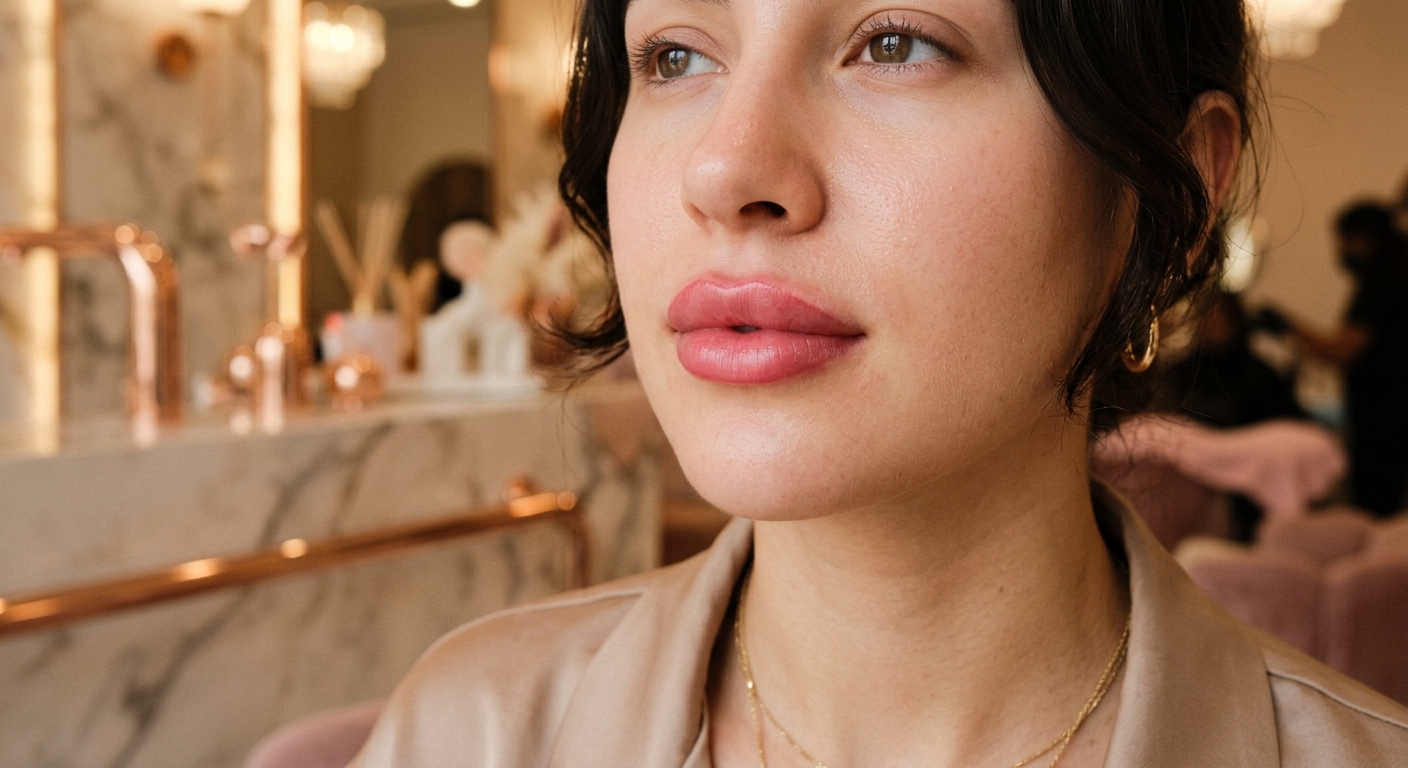
Why Lip Blush Healing in Dubai Heat Is a Different Game
Semi-permanent lip blush is one of the gentler permanent makeup treatments on paper, but Dubai's heat, indoor humidity, and constant air-conditioning make the first two weeks uniquely demanding. The pigment sits in the upper dermis of the lip, an area with a high concentration of blood vessels and very few oil glands — so the tissue does not "self-moisturise" the way brow skin does. Combine that with ambient temperatures that regularly stay above 38°C, and the aftercare window becomes the part of the treatment that decides whether your final shade stays soft and even, or fades patchy after month three.
This day-by-day guide is the exact protocol our artists give every lip blush client at our Al Wasl Road studio. It assumes you have just booked, are mid-healing, or are still researching before committing — read it once before day one so there are no surprises on day five.
Lip Blushing Aftercare Day 1-14: Day-by-Day Timeline
Day 1 — Bold, Tight, and Surprisingly Dark
The pigment will look roughly 40 to 60 percent darker and slightly thicker than your final shade. The lips feel tight, almost like a mild windburn, and you will see small beads of lymph seeping along the lip line for the first three to four hours. That fluid is normal — it is the body's plasma response to the tiny punctures, and it dries into a thin protective film overnight.
- What you see: bold, saturated colour, mild swelling of the upper lip, occasional lymph droplets.
- What you feel: tightness, warmth, no sharp pain.
- What to do: blot gently with a clean lint-free tissue every 30 minutes for the first four hours. Replace your pillowcase. Sleep on your back with your head elevated to minimise morning swelling.
Day 2 — Swelling Peaks, Pigment Still Looks Dark
Morning swelling is at its worst, especially if you slept on your front or had salty food the night before. By mid-afternoon the swelling drops, but the colour still looks intense. The lips may start to feel dry as the top layer of pigment begins to set.
- What you see: peak puffiness in the AM, fading by PM. Pigment slightly raised, very dark.
- What you feel: tightness, mild itching as the skin dries.
- What to do: keep the lips dry for the first 24 hours. No water, no lip balm, no kissing, no spicy food. Drink through a straw. Avoid hot drinks and steamy environments.
Day 3 — The "Too Dark" Worry Begins
This is the day most clients panic-call their artist. The pigment looks dramatically dark, almost bruised in some lighting, and the lips feel tight and slightly uncomfortable. Do not be alarmed — what you see is pigment sitting on top of the skin, suspended in dried lymph. The real colour will not show until day 10.
- What you see: bold, almost theatrical darkness. Slight dryness on the lip border.
- What to feel: itching increases. The urge to peel or rub is real — resist it.
- What to do: start applying the aftercare balm your artist gave you, three to four times a day in a thin layer. Do not pick at any flaking. Do not apply lip gloss or lipstick.
Day 4 — First Visible Flaking Starts
Small flakes of skin begin to lift off the lip surface, similar to dry skin after a sunburn. The colour underneath looks patchy, pale, and uneven. This is the body shedding the outer layer of epidermis that the pigment initially stained — perfectly normal. The pigment that remains in the dermis will reappear in week two.
- What you see: light flaking, especially along the centre of the lower lip. Underneath, the colour looks pinkish-grey.
- What you feel: itching peaks but should not be painful. The flakes are not wounds — they are dead skin.
- What to do: let the flakes fall off on their own. If a flake hangs on, snip it with clean, fine scissors rather than pulling. Keep applying the aftercare balm thinly three to four times daily.
Day 5 — Patchy "Lost the Colour" Phase
Most of the top-layer pigment has now shed, and the lips may look almost bare — particularly across the centre of the upper lip. This is the moment clients text their artist saying "I think the colour fell out." It has not. The visible pigment is in the dermis, masked by a thin new layer of skin growing over it.
- What you see: pale, patchy, sometimes pinkish. The shape may look uneven from side to side.
- What you feel: tenderness has faded. Itching is subsiding.
- What to do: stay calm. The colour returns in days 10 to 14. Continue gentle balm application. Do not exfoliate, do not use a lip scrub.
Day 6-7 — Colour Pulls Lighter Than You Expected
By the end of week one, the lips look about 50 to 70 percent lighter than day one. This is the moment to judge the base colour your artist chose. It is meant to look soft and natural at this stage — the final healed result will deepen slightly over the next week, but it will never return to the bold day-one intensity.
- What you see: soft, pale, natural-looking lip tint. Slight dryness, possibly a few small white bumps (milia) on the lip line.
- What you feel: comfortable, almost normal.
- What to do: switch from the aftercare balm to a plain, fragrance-free lip moisturiser. Avoid actives (retinol, vitamin C, exfoliants) on the lip area. Drink plenty of water — dehydration is the fastest way to slow healing in Dubai's dry indoor air.
Day 8-10 — Pigment Re-emerges, Tone Evens Out
The flaking has stopped. The skin looks smooth and slightly pink, and the colour is slowly re-emerging from underneath. The shade will look softer and slightly cooler than the day-one version — closer to your final healed result, but still 15 to 25 percent lighter than where it will end up.
- What you see: smooth, even-toned lips. Pigment deepening back in. Slight residual dryness on the corners.
- What you feel: completely normal. No pain, no itching.
- What to do: keep the lip area moisturised. You can wear a plain, hydrating lip balm now (no tint, no plumper, no medicated formulas). Continue avoiding spicy food for a few more days.
Day 11-14 — The True Healed Result
By the end of week two, the pigment has settled into its final resting place in the dermis. The colour has deepened slightly, the tone has evened out, and the lips look like a soft, natural flush of colour that wakes up with you every morning. This is the healed colour you will keep for the next 18 to 24 months before a refresh is needed.
- What you see: soft, even, natural lip colour. Slight residual dryness possible.
- What you feel: completely healed.
- What to do: book your touch-up appointment if your artist flagged one. Most clients benefit from a perfecting session at week 6 to 8 to lock in the final shape and depth.
Dubai Heat-Specific Aftercare Rules
The day-by-day healing timeline above is universal, but Dubai adds a few extra variables that can slow recovery or fade pigment if you ignore them. These are the rules our artists repeat to every lip blush client who walks out of our studio.
- Stay out of direct sunlight for the first 10 days. UV breaks down pigment molecules and burns the fresh lip skin. A wide-brimmed hat is better than SPF lip balm in the first week — chemical SPF can irritate a healing lip.
- Skip the swimming pool and the sea for at least 14 days. Chlorine and salt both leach pigment out of fresh tattoos, and Dubai's pool-heavy social calendar is the most common cause of premature fading.
- Avoid saunas, hammams, and hot yoga for the first 10 days. Heat and sweat open the cuticle and fade colour prematurely — even a 15-minute hot yoga class on day 7 can set you back.
- Do not eat spicy food for the first 7 days. Capsaicin irritates healing lip tissue and can cause uneven pigment retention. Stick to mild, room-temperature or cool foods.
- Do not drink very hot beverages for the first 5 days. Steam and heat soften the healing skin and can lift pigment out. Use a straw for hot drinks after day 3 if you cannot give them up.
- Run a humidifier indoors if you sleep or work in heavy air-conditioning. Dubai's indoor humidity often drops below 30 percent, which dehydrates fresh lip skin and slows healing.
- Do not use retinol or vitamin C serums near the lip line for 30 days. Both speed up cell turnover and fade pigment.
- Do not use whitening toothpaste for the first two weeks. The SLS and active ingredients migrate to the lip line during brushing and can bleach fresh pigment.
Common Concerns During the First Two Weeks
"My Lips Look Bruised on Day 3"
Bold, almost black-looking pigment on day 3 is normal. It is not bruising — it is the combination of pigment, dried lymph, and the top layer of stained skin that has not yet shed. The colour lifts by 50 to 70 percent over the next week, so what you see now is the darkest your lips will ever look.
"One Side Looks Healed, the Other Doesn't"
Asymmetry during healing is extremely common. Most people sleep on one side, drink from one side of a straw, or have slightly different skin thickness between the left and right side of the upper lip. Both sides usually catch up by day 14, but if one side remains dramatically lighter at week four, mention it at your touch-up so the artist can add density where needed.
"I Have Small White Bumps on My Lip Line"
These are milia — tiny clogged pores that form under a healing layer of skin. They are not infected, they are not a pigment reaction, and they clear on their own as the skin matures. Avoid squeezing them. Warm compresses (a clean cloth dipped in lukewarm water, held gently to the lips for 60 seconds, twice a day) help them resolve faster.
"The Colour Looks Orange or Pink Instead of My Target Shade"
This is a temporary phase that happens as the skin matures and the top layer of pigment oxidises. Most cool-toned pigments pull slightly warm during days 5 to 9, then settle back to the intended rose or berry shade by day 14. If the colour stays warm after week three, your artist may adjust the formula at your touch-up.
"Can I Wear Lipstick During Healing?"
No lip products for the first 14 days. Mineral makeup, conventional lipstick, lip gloss, lip plumper, and medicated balms all interfere with healing. After day 14, you can return to a gentle, hydrating lip balm. Resume full lipstick wear from day 21 onwards.
When to Book Your Touch-Up
A lip blush tattoo in Dubai is a two-session treatment. Your first appointment lays down the base colour; your touch-up at week 6 to 8 refines the shape, evens out the tone, and locks in the final result. Skipping the touch-up is the single biggest reason clients think their lip blush "did not take" — usually it just needs the second pass.
During the touch-up, your artist will assess how your skin held the pigment, adjust the colour depth if needed (deeper for medium and olive tones, softer for fair skin), and perfect any asymmetry between the two sides of the lips. Expect to leave the touch-up with a slightly bolder colour than the day-14 result — that fades again over the next week.
Lip Blushing Aftercare Dubai: Frequently Asked Questions
Does lip blush healing hurt more than other PMU treatments?
The appointment itself is very tolerable — most clients rate the discomfort at 3 to 4 out of 10, similar to lip filler. The healing phase is uncomfortable but not painful. The lips feel tight and itchy for the first week, then settle into a normal sensation by day 10.
Can I exercise during the first two weeks?
Light walking is fine from day 2. Strenuous gym sessions, hot yoga, and swimming should wait until day 14. Sweat, heat, and pool chlorine all fade fresh pigment. Outdoor running in Dubai's summer heat is also off the table for the first 10 days.
What if I have an event during the healing window?
Plan the appointment at least three weeks before any major event (wedding, photoshoot, holiday). Day 5 is the worst day to be photographed — patchy, pale, and visibly healing. By week three, the result is presentable for any occasion, and by week four the colour is fully settled.
How long does the final result last?
Most clients enjoy their healed lip blush for 18 to 24 months before a refresh is needed. Dubai's strong sun, frequent swimming, and use of active skincare can shorten this to 12 to 18 months. A touch-up every 12 to 18 months keeps the colour fresh and even.
Is it safe to combine lip blush with lip filler?
Yes — but sequence matters. Book your lip blush first, wait at least four weeks for full healing, then book filler. If you have existing filler, wait at least four weeks after your last filler appointment before getting lip blush. The two treatments work beautifully together: filler adds volume, lip blush adds colour.
Can I get lip blush if I have a history of cold sores?
Yes, but you must pre-treat with an antiviral medication (valacyclovir or acyclovir) starting two days before the appointment and continuing for five days after. The lip blush procedure can trigger a cold sore outbreak in clients who carry the virus, which would damage the healing pigment. Talk to your artist and your doctor before booking.
Booking Your Lip Blush in Dubai
The first two weeks of healing are the part no one likes to think about, but they are also where the final result is made. Careful aftercare turns a fresh lip blush into a soft, natural flush of colour that saves you minutes every morning for the next two years. Skip the aftercare and even the best artist in Dubai cannot save the colour.
Brows and Lips Dubai has performed hundreds of lip blush treatments at our Al Wasl Road studio. Every appointment includes a full consultation, a custom pigment blend matched to your skin tone and natural lip colour, and a six-week perfecting session so the final result is exactly what you came in for. If you are still researching the right shade, our lip blush shade selection guide walks through how artists match pigment to undertone, and our lip blush longevity guide covers what to expect across the two-year lifespan of the treatment.
Remember: Days 5 to 9 are when the colour looks its worst — patchy, pale, and uneven. This is normal skin-shedding, not pigment loss. Trust the process, keep your hands off, and the real colour reappears by day 14. If anything looks painful, swollen, or infected after day 4, contact your artist immediately.