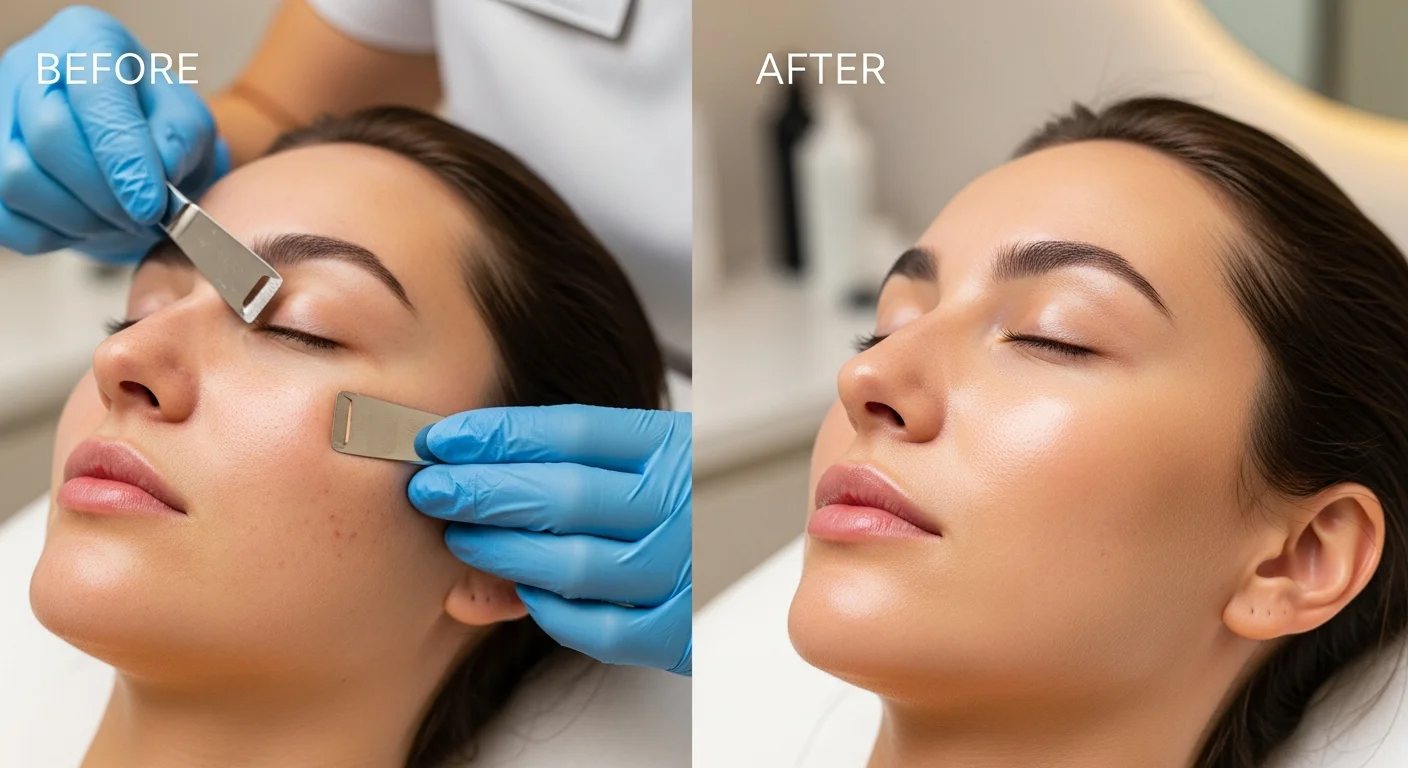
Dermaplaning has become one of the most sought-after facial treatments in Dubai, and for good reason. This gentle exfoliation technique removes dead skin cells and fine vellus hair (peach fuzz) using a sterile surgical blade, leaving your skin incredibly smooth, bright, and ready to absorb skincare products more effectively. At Brows and Lips, we recommend dermaplaning to clients preparing for a signature facial or anyone looking to refresh their complexion without downtime. It is safe for most skin types, takes about 30 minutes, and delivers instant results.
What Is Dermaplaning?
Dermaplaning is a physical exfoliation treatment performed by a licensed aesthetician. A sterile, single-use surgical scalpel is held at a 45-degree angle and gently scraped across the surface of the skin. The blade removes the top layer of dead skin cells and fine facial hair — a combination that can make your skin look dull and cause makeup to apply unevenly. The procedure is painless and feels like a light scraping sensation. Unlike shaving, which cuts hair at the surface, dermaplaning exfoliates the skin at the same time, so the benefits go beyond hair removal.
The Benefits of Dermaplaning
- Instant glow: Your skin looks brighter and more radiant immediately after treatment. The removal of dead skin cells reveals a fresh, healthy layer underneath.
- Smoother makeup application: Without peach fuzz, foundation and powder sit directly on the skin rather than on hair. Makeup glides on smoothly and looks more natural.
- Better product absorption: Serums, moisturisers, and treatments penetrate deeper when there is no barrier of dead skin cells or fine hair. This means your skincare routine becomes more effective overnight.
- Non-invasive and painless: There is no downtime, no heat, no chemicals, and no discomfort. You can have the treatment during your lunch break and return to work immediately.
- Safe for most skin types: Dermaplaning is suitable for all skin tones and types, including sensitive skin. It does not use heat or chemicals, so there is minimal risk of irritation.
- Reduces the appearance of fine lines: By removing the outermost layer of dull, dead skin, fine lines and wrinkles appear softer and less prominent.
Dermaplaning vs Other Exfoliation Methods
Dermaplaning vs Microdermabrasion
Microdermabrasion uses a diamond-tipped wand or crystals to exfoliate the skin. It is effective but can be too harsh for sensitive skin or rosacea-prone complexions. Dermaplaning is gentler and also removes vellus hair, which microdermabrasion does not address.
Dermaplaning vs Chemical Peels
Chemical peels use acids (glycolic, salicylic, lactic) to dissolve the bonds between dead skin cells. They can provide deeper exfoliation but require downtime and are not suitable for everyone, especially during Dubai's hot months when sun sensitivity is a concern. Dermaplaning has no chemical involvement and no photosensitivity risk.
Dermaplaning vs At-Home Dermaplaning Tools
At-home dermaplaning tools exist, but they are significantly less effective than professional treatments. Professional-grade blades, proper technique, and a sterile environment make a dramatic difference in both results and safety. The risk of nicks, irritation, and infection is much higher with DIY attempts.
What to Expect During a Dermaplaning Session
A typical dermaplaning session at Brows and Lips takes 30 to 45 minutes. Your aesthetician will start by cleansing your skin thoroughly to remove makeup, oil, and impurities. Your skin is then dried completely — the blade works best on dry skin, not wet. The aesthetician holds the skin taut and uses short, feather-light strokes with the scalpel at a 45-degree angle. The entire face, including the forehead, cheeks, nose, chin, and jawline, is treated. The neck can also be included. After the scraping is complete, a soothing hydrating serum and moisturiser are applied to calm the skin and lock in moisture. Many clients describe the sensation as a gentle tickle or light cat-like scratch.
Dermaplaning Aftercare — Getting the Best Results
After your dermaplaning treatment, your skin is more receptive to products but also temporarily more sensitive. Follow these aftercare guidelines to maximise your results:
- Avoid direct sun exposure for 24 to 48 hours. Your fresh skin layer is more vulnerable to UV damage. Wear SPF 50+ even if you are staying indoors — Dubai sun penetrates through windows.
- Skip active ingredients for 24 hours. Do not use retinol, glycolic acid, salicylic acid, or vitamin C serums on the day of your treatment. Stick to gentle cleansing and moisturising only.
- Do not touch or pick at your skin. The exfoliated layer is delicate. Avoid rubbing, scrubbing, or using facial scrubs for at least three days.
- Hydrate and moisturise. Your barrier function is temporarily compromised. Use a rich, fragrance-free moisturiser and drink plenty of water to support skin recovery.
- Skip the gym for 24 hours. Sweat and bacteria can irritate freshly exfoliated skin. Avoid intense exercise, saunas, and steam rooms for a day.
- Wait three to four weeks between sessions. Your skin needs time to regenerate. Most clients come in once a month for maintenance.
Who Should Try Dermaplaning?
Dermaplaning is ideal for anyone who wants smoother, brighter skin without downtime. It is especially popular among brides-to-be in Dubai who want flawless makeup on their wedding day. It is also excellent for people with dry, dull skin who find that their skincare products are not absorbing well. The treatment is suitable for most Fitzpatrick skin types, including melanin-rich skin, because it does not involve heat or chemical burns. The main contraindications are active acne (especially cystic acne), open wounds, eczema flare-ups, rosacea with active pustules, and sunburn. If you have active breakouts, your aesthetician may recommend treating the acne first before scheduling a dermaplaning session.
Frequently Asked Questions About Dermaplaning
Does dermaplaning cause hair to grow back thicker?
No — this is the most common myth about dermaplaning. Vellus hair grows back at the same thickness and texture as before. The blunt tip created by the blade can feel slightly coarser during the first few days of regrowth, but this is temporary and not noticeable to anyone but you.
How often should I get dermaplaning?
Every three to four weeks is ideal. This matches the natural hair growth cycle and gives your skin enough time to regenerate between sessions.
Can I get dermaplaning if I have acne scars?
Yes — dermaplaning is safe for acne scars as long as you do not have active, inflamed breakouts. It helps smooth the skin surface and improves the appearance of shallow scars over time.
Can I combine dermaplaning with a facial?
Absolutely. Many clients choose to add dermaplaning to their signature facial for enhanced exfoliation and glow. The facial serums and masks absorb much better after the barrier of dead skin and hair is removed.
Is dermaplaning painful?
Not at all. Most clients describe it as a light, ticklish sensation. No anaesthetic or numbing cream is needed.
Will my makeup look different after dermaplaning?
Yes — in a good way. Without peach fuzz, your foundation will sit directly on your skin rather than on fine hair, creating a much smoother, airbrushed finish.
How long do the results last?
The smoothness from exfoliation lasts about two to three weeks. Hair regrowth is noticeable around three to four weeks, which is when most clients book their next session.
Smooth skin is the foundation of every great look. Dermaplaning gives you that glow without downtime or discomfort. Add it to your regular skincare routine and your skin will thank you with every product you apply.